

Introduction
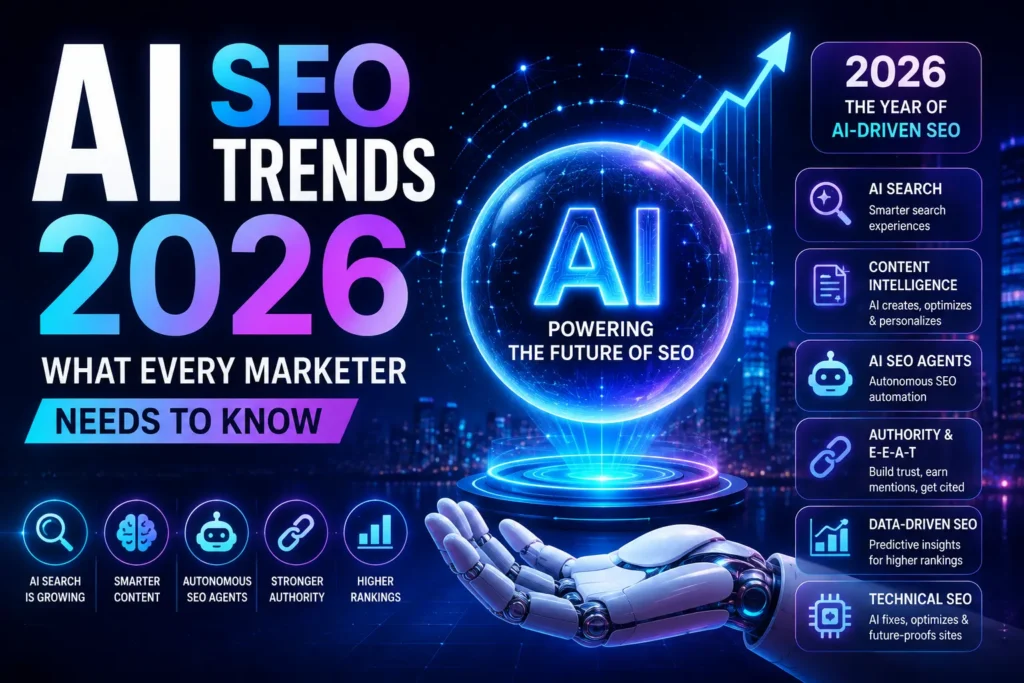
AI SEO Trends 2026: If your SEO strategy feels outdated this year, you’re not alone. AI SEO trends are changing how people search and discover information online.
Search results now begin with AI-generated summaries before the traditional blue links. At the same time, more users rely on ChatGPT, Perplexity, and Google’s Gemini for answers. Because of this, rankings and click-through rates no longer tell the complete story of your search visibility.
Understanding these changes is essential. Many marketers still optimize only for traditional search engines. However, users now discover content through AI-powered search, conversational assistants, and multiple digital platforms.
In this guide, you’ll explore the latest AI SEO trends for 2026. You’ll learn why they matter, how they affect your SEO strategy, and what practical steps you can take to stay ahead.
The State of Search in 2026: Why AI SEO Trends Matter Now
Search hasn’t disappeared. It’s fragmented. People still search constantly, but where and how they search has diversified in a way that changes what “visibility” even means.
Clicks Are Down, but Impressions Are Up
One of the clearest AI SEO trends in 2026 is the decline in organic click-through rates. Industry studies show that AI Overviews reduce clicks on the top organic result by about one-third. However, overall search volume and impressions continue to grow.
In other words, more people are searching. Yet fewer users click through to websites because AI often provides the answer directly on the results page.
Visibility still matters. However, the definition of visibility has changed. Your content now needs to earn mentions and citations in AI-generated answers, not just rank at the top of the search results.
AI Platforms Are Growing Alongside Search
It’s easy to assume that ChatGPT and similar AI tools will replace Google. However, current data tells a different story.
Google still processes billions of searches every day. Conversational AI platforms handle far fewer queries. Even so, referral traffic from large language model platforms continues to grow each year.
Although this traffic remains a small share of total search visits, its growth is significant. Therefore, treat AI platforms as an emerging traffic channel rather than a replacement for traditional search.
Zero-Click Searches Are Becoming the Norm
A growing number of Google searches now end without a click. AI-generated summaries often answer users’ questions directly on the results page. As a result, billions of users receive answers without visiting a website.
This is one of the most important AI SEO trends of 2026. Your content must earn mentions and citations instead of relying only on rankings. That approach helps you reach more searchers in AI-powered search experiences.
AI SEO Trends 2026 in Generative Engine Optimization (GEO) Is No Longer Optional
Perhaps the most talked-about of this year’s AI SEO trends is the rise of AI SEO Trends in Generative Engine Optimization (GEO), often abbreviated GEO, alongside its close cousin, Answer Engine Optimization (AEO).
What GEO Actually Means
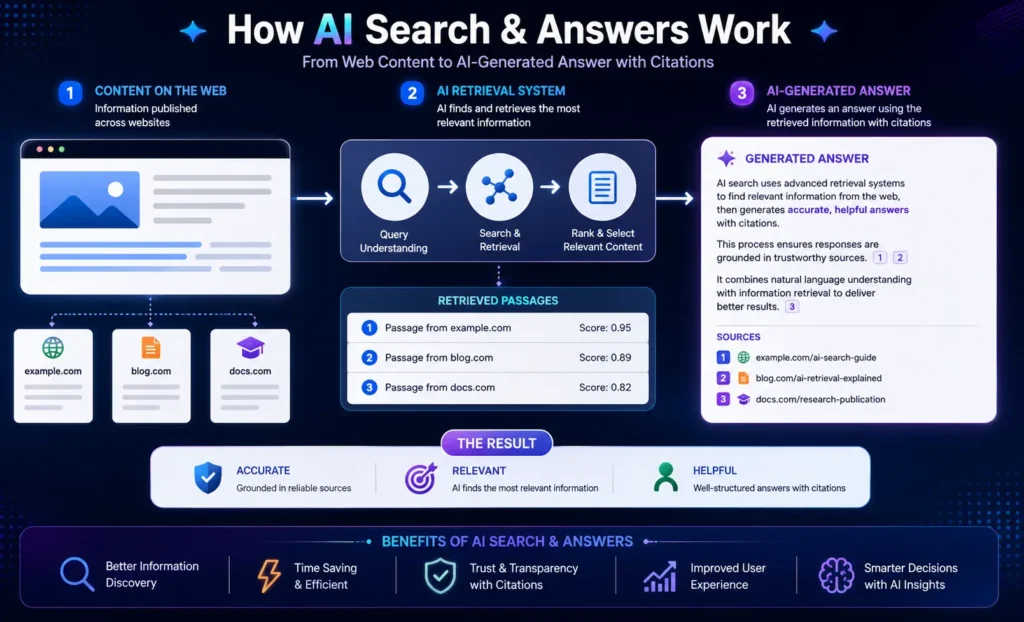
Traditional SEO optimizes for ranking a page. GEO optimizes for being the source an AI system pulls from when it generates an answer. That’s a meaningfully different target. Instead of asking, “How do I rank #1?” ask, “How can I help AI systems trust and cite my content?” This shift changes how marketers approach SEO.
How to Optimize for AI Citations
A few practical shifts matter here:
- Structure content around direct answers. Lead sections with a clear, concise answer before expanding into detail, since AI systems tend to extract and cite the clearest statement of an idea.
- Cover topics comprehensively, not just a single keyword. Pages that address a full cluster of related questions get cited more often than pages targeting one narrow term.
- Build genuine topical authority. AI systems weigh whether a brand is mentioned credibly across multiple trusted sources, not just on its own website.
- Keep content technically clean and crawlable. If an AI crawler can’t retrieve your content in the first place, none of the above matters. Retrieval is the gate everything else passes through.
Markdown and Structured Content Are Gaining Ground
Some infrastructure providers now allow AI crawlers to request lightweight Markdown pages instead of full HTML. Markdown uses fewer computational tokens and is easier for AI systems to process. As a result, AI can spend more resources understanding your content instead of parsing complex code.
This may seem like a small technical change. However, it reflects an important trend. AI systems increasingly prefer clean, well-structured content over code-heavy pages.
Search Everywhere Optimization: SEO Beyond Google
Another major AI SEO trend is changing how people search. Search no longer begins and ends on Google.
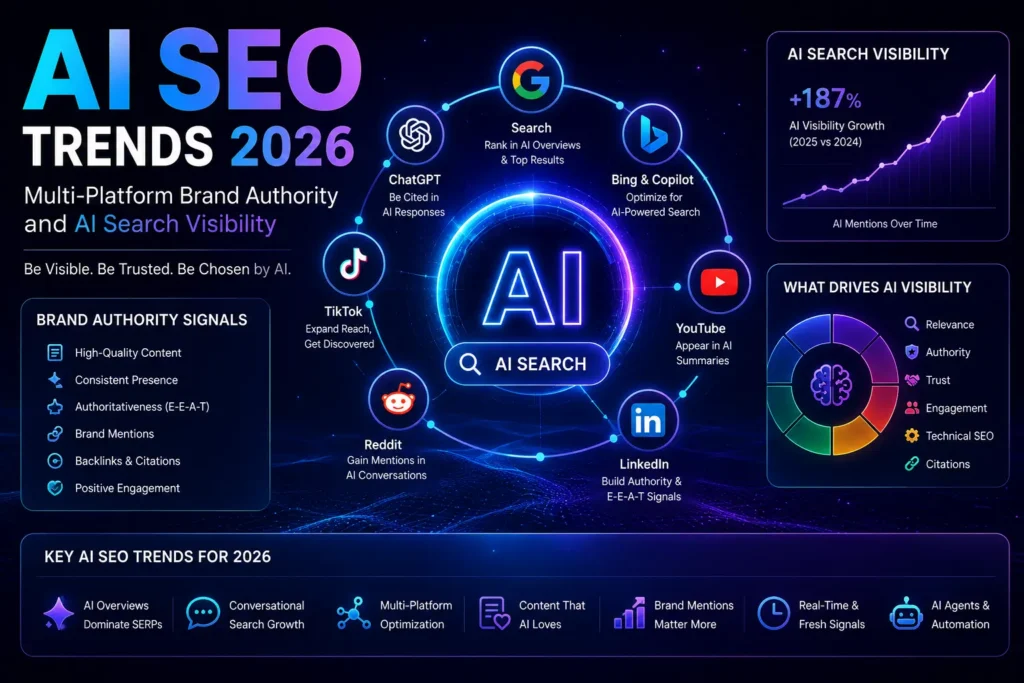
People now discover brands through AI chatbots, social media, videos, and online communities. Many users visit these platforms before using a traditional search engine. Therefore, marketers must rethink what online visibility really means.
Why Your AI SEO Trends 2026 Strategy Needs to Extend Off-Site
Large language models pull much of their training and retrieval data from public platforms like Reddit, LinkedIn, YouTube, and industry forums. It’s not just indexed websites anymore.
A Reddit thread, a YouTube tutorial, or a LinkedIn post can all become source material for an AI-generated answer, sometimes ranking above your own website in influence, even if it never appears in a traditional SERP.
That means a brand’s visibility inside AI answers is increasingly shaped by how it shows up across the entire internet. It’s no longer just about its own domain. A company can have a technically flawless website and still be invisible to AI search if nobody is talking about it anywhere else.
This has given rise to what many strategists now call Search Everywhere Optimization. It’s the practice of maintaining a consistent, credible presence across social platforms, video, forums, and review sites.
AI systems treat all of this public information as fair game when assembling an answer, so gaps in your off-site presence become gaps in your visibility.
Why Reddit and Forums Carry More Weight Than Ever
Reddit deserves special attention here. Search engines and AI platforms alike have leaned heavily on Reddit threads as a trusted source for real, unfiltered opinions, since forum discussions often read as more authentic than polished marketing copy.
This means a single well-regarded comment thread about your product can influence how AI systems describe your brand, for better or worse.
The practical takeaway isn’t to flood forums with promotional posts. That tends to backfire quickly, since community members and moderators are quick to flag anything that reads as inauthentic.
Instead, focus on genuine participation: answering questions, sharing honest pros and cons, and building a reputation as a credible voice in your niche over time.
Video and Multimodal Search Are Growing Fast
Video content is playing a bigger role in how AI systems retrieve and summarize information, not just how humans browse YouTube.
Multimodal AI search can now index spoken content, on-screen text, and even visual context within a video, then pull relevant clips or summaries into an answer.
For brands, this means a well-structured video, with a clear title, a detailed description, and an accurate transcript, can become a citation source in ways a text article alone might not.
If your team already produces how-to videos, product demos, or explainer content, treating those transcripts with the same SEO care as a blog post is worth the effort.
Social Proof and Review Signals
AI systems increasingly weigh sentiment when deciding whether to recommend a brand, not just whether a page technically ranks well.
Reviews on platforms like G2, Trustpilot, or industry-specific directories, along with sentiment expressed across social media, all feed into how confidently an AI system will mention your brand.
This is where reputation management and SEO start to overlap in ways they rarely did a few years ago. A pattern of negative reviews left unaddressed can quietly suppress how often AI systems recommend you, even if your website itself is in excellent shape.
Practical Steps for a Multi-Platform Presence
Audit where your brand is already being discussed before adding new platforms. It’s often more effective to strengthen an existing presence than to spread thin across everything at once.
Maintain active, substantive participation in relevant industry forums and communities like Reddit and niche subreddits, focusing on genuine helpfulness over promotion.
Publish video content with clear, descriptive titles and transcripts, since multimodal AI search increasingly indexes video and image content alongside text.
Keep your brand’s presence on LinkedIn and other professional platforms current and aligned with your website’s messaging, so AI systems encounter a consistent story about who you are.
Monitor and respond to reviews promptly, since AI systems increasingly weigh sentiment when deciding whether to recommend a brand.
Why Your AI SEO Trends 2026 Strategy Needs to Extend Off-Site
Large language models learn from public sources such as Reddit, LinkedIn, YouTube, and industry forums. They also use information from traditional websites.
That means a brand’s visibility inside AI answers on AI platforms increasingly shapes how it shows up across the entire internet, not just its own domain.
This has given rise to what many strategists now call Search Everywhere Optimization, the practice of maintaining a consistent, credible presence across social platforms, video, forums, and review sites, since AI systems treat all of this public information as fair game when assembling an answer.
Practical Steps for a Multi-Platform Presence
- Maintain active, substantive participation in relevant industry forums and communities like Reddit and niche subreddits.
- Publish video content with clear, descriptive titles and transcripts, since multimodal AI search increasingly indexes video and image content alongside text.
- Keep your brand’s presence on LinkedIn and other professional platforms current and aligned with your website’s messaging.
- Monitor and respond to reviews, since AI systems increasingly weigh sentiment when deciding whether to recommend a brand.
(For teams looking to operationalize this shift, our related guide on [AI SEO agents and automation tools] covers how autonomous tools can help monitor brand mentions across platforms.)
AI SEO Trends 2026: Why Brand Authority and E-E-A-T Matter More Than Ever
If there’s one thread connecting nearly every credible piece of analysis on AI SEO trends this year, it’s this: brand authority has become a genuine ranking and citation factor, not just a nice-to-have.
Why AI Systems Reward Strong Brands
AI systems aggregate information about a brand from reviews, social sentiment, PR coverage, and forum discussions to judge credibility before deciding whether to cite or recommend it.
A site with weak brand signals but strong technical SEO is now more vulnerable to algorithm shifts than a well-known, trusted brand with a smaller technical footprint.
→ E-E-A-T Signals to Prioritize for AI SEO Trends 2026
- Experience: Show firsthand knowledge through original examples, case studies, or data your team collected directly, not just summarized secondhand information.
- Expertise: Attribute content to real authors with demonstrable credentials in the subject matter.
- Authoritativeness: Earn mentions and citations from other credible, independent sources, since AI systems weigh third-party validation heavily.
- Trustworthiness: Keep information accurate, current, and transparent about sourcing, since AI systems appear increasingly sensitive to outdated or unverifiable claims.
According to Google’s own documentation on how it evaluates content quality, the company has consistently emphasized that helpful, people-first content created to genuinely serve a reader’s needs performs better over time than content engineered primarily to rank (Google Search Central).
AI Content Creation and AI SEO Trends 2026: What Actually Works
Given how widespread AI writing tools have become, it’s worth addressing the elephant in the room directly: can AI-written content still rank well?
The Short Answer
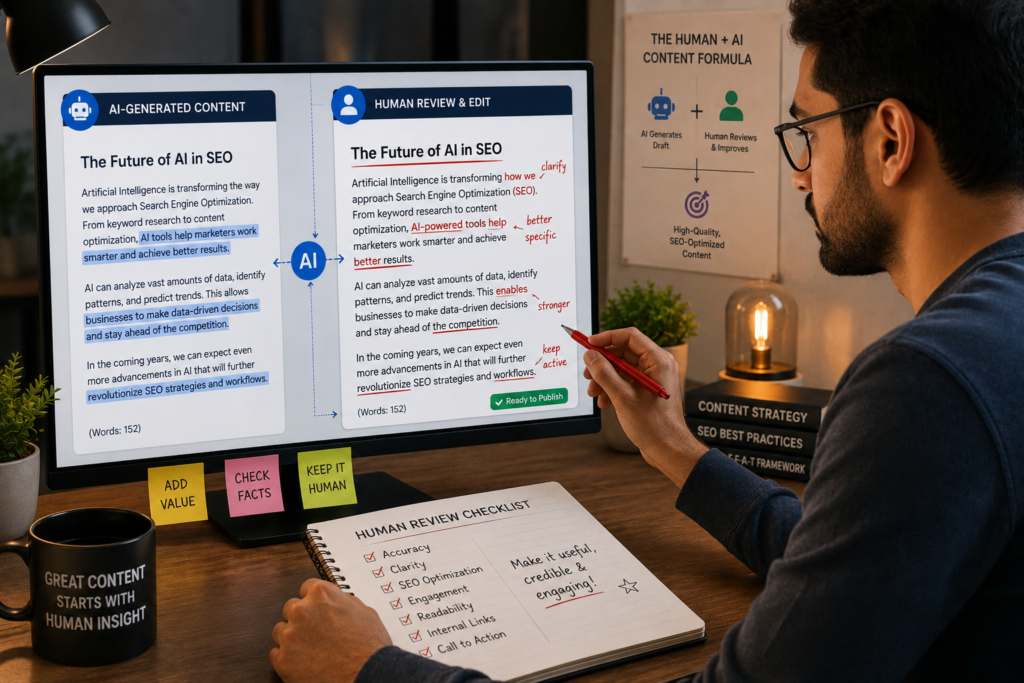
Yes, but only when it’s edited, fact-checked, and improved with genuine human insight rather than published as a raw, unedited draft. Search engines do not penalize content simply because AI helped create it.
They penalize content that’s thin, inaccurate, or interchangeable with dozens of other AI-generated pages saying the same generic things.
What Separates Ranking AI Content from Ignored AI Content
| Factor | AI Content That Ranks | AI Content That Gets Ignored |
|---|---|---|
| Editing process | Human-reviewed, fact-checked, refined | Published as-is, no review |
| Originality | Includes unique examples or data | Generic, interchangeable phrasing |
| Depth | Covers a full topic cluster | Targets a single shallow keyword |
| Voice | Reflects genuine brand expertise | Reads like generic AI output |
| Citations and sourcing | Links to credible, verifiable sources | Vague or absent attribution |
| Update cadence | Refreshed as facts and data change | Left static and outdated |
The pattern is consistent across nearly every case study on this topic: AI accelerates the drafting process, but the human layer, adding real insight, checking facts, and refining voice, is what actually determines whether content performs.
AI SEO Trends 2026 Shaping the Future of Search
With so many new platforms launching, it helps to understand the categories of AI tools shaping the future of SEO rather than chasing every new product announcement.
AI Visibility and Citation Tracking Tools
A newer category of tools has emerged specifically to monitor how often a brand is mentioned, or how often AI systems cite inside AI-generated answers across platforms like ChatGPT, Perplexity, and Google’s AI Overviews.
Metrics like AI answer inclusion rate and citation frequency are becoming as important to track as traditional keyword rankings.
Autonomous SEO Agents
Beyond tracking, a growing set of tools now handle SEO tasks with genuine autonomy, running technical audits, generating content briefs, and monitoring competitors continuously rather than requiring manual checks.
These agents represent one of the more mature applications of AI in the SEO workflow, since much of technical auditing and reporting is repetitive, data-heavy work that automation handles well.
Structured Data and Markdown Optimization Tools
As AI crawlers increasingly favor lightweight, well-structured content, tools that help audit and clean up a site’s markup, schema, and formatting are becoming increasingly important to overall AI visibility, not just traditional accessibility and technical SEO.
Content Research and Gap Analysis Platforms
AI-powered research tools that analyze what’s actually getting AI systems to cite across a topic, rather than just what ranks, are helping content teams prioritize which gaps matter most for AI-driven visibility, not just traditional search volume.
Common Pain Points Marketers Face With AI SEO Trends
It’s worth naming the challenges honestly, since a lot of marketers are navigating this transition without a clear playbook.
“How Do I Measure Success If Clicks Are Declining?”
Shift part of your reporting toward AI-specific metrics: citation frequency, brand mention sentiment, and referral traffic from AI platforms, alongside traditional rankings and clicks. A decline in click-through rate on an informational query doesn’t necessarily mean a failure if your brand is still being cited and remembered.
“Is It Still Worth Investing in Traditional SEO?”
AI search systems still rely on crawlability, backlinks, and topical authority. Traditional SEO remains the foundation. The retrieval layer beneath AI answers hasn’t fundamentally changed; what’s changed is how the final answer gets presented to the user.
“How Do I Know Which AI SEO Trends Are Hype vs. Real?”
Look for trends that Measurable data supports (like the decline in organic CTR from AI Overviews) versus trends based purely on speculation about future behavior.
Not every “just in case” optimization tactic that circulates in the SEO community holds up under scrutiny, so prioritize changes with clear evidence behind them.
Frequently Asked Questions About AI SEO Trends
What are the biggest AI SEO trends 2026?
The most significant shift is the rise of AI SEO Trends in Generative Engine Optimization (GEO), the practice of optimizing content to be cited and summarized by AI systems like Google’s AI Overviews, ChatGPT, and Perplexity, rather than optimizing purely for traditional page rankings.
Do AI Overviews actually reduce website traffic?
Yes, generally. Industry data shows AI Overviews reduce clicks on the top organic search result by roughly a third on average, even as overall search impressions increase. This makes earning a citation inside the AI-generated summary itself increasingly valuable.
Will AI search engines like ChatGPT replace Google?
Not in the near term. Google still handles a vastly larger volume of daily searches than conversational AI platforms combined, though AI referral traffic is growing quickly. The more realistic outlook is that AI platforms become an additional discovery channel alongside traditional search, not an outright replacement.
Can AI-written content still rank well in 2026?
Yes, provided it’s edited, fact-checked, and enhanced with genuine expertise rather than published unedited. Search engines evaluate content based on quality and usefulness, not on whether AI assisted in drafting it.
What AI tools should marketers prioritize learning first?
Start with AI visibility and citation tracking tools, since understanding whether your brand appears in AI-generated answers is foundational to everything else. From there, autonomous SEO agents for technical audits and content briefs offer some of the fastest time savings.
Final Thoughts: Adapting to AI SEO Trends 2026 Without Losing Your Footing
The pace of change in search can feel overwhelming, but the fundamentals haven’t disappeared; they’ve just been joined by a new layer. Helpful, well-researched, genuinely useful content still wins. What’s changed is where and how that content gets discovered, cited, and rewarded.
Successful marketers will not chase every new AI SEO trend. Instead, they will focus on proven strategies backed by real data. They’ll be the ones who separate genuine, data-backed shifts, like the rise of GEO and the decline in click-through rates, from speculative hype, and adjust their strategy deliberately rather than reactively.
Ready to put these AI SEO trends into practice? Check out our guide on [AI SEO agents and automation tools] to see how autonomous tools can help you track AI citations, run technical audits, and keep your content strategy ahead of the curve.